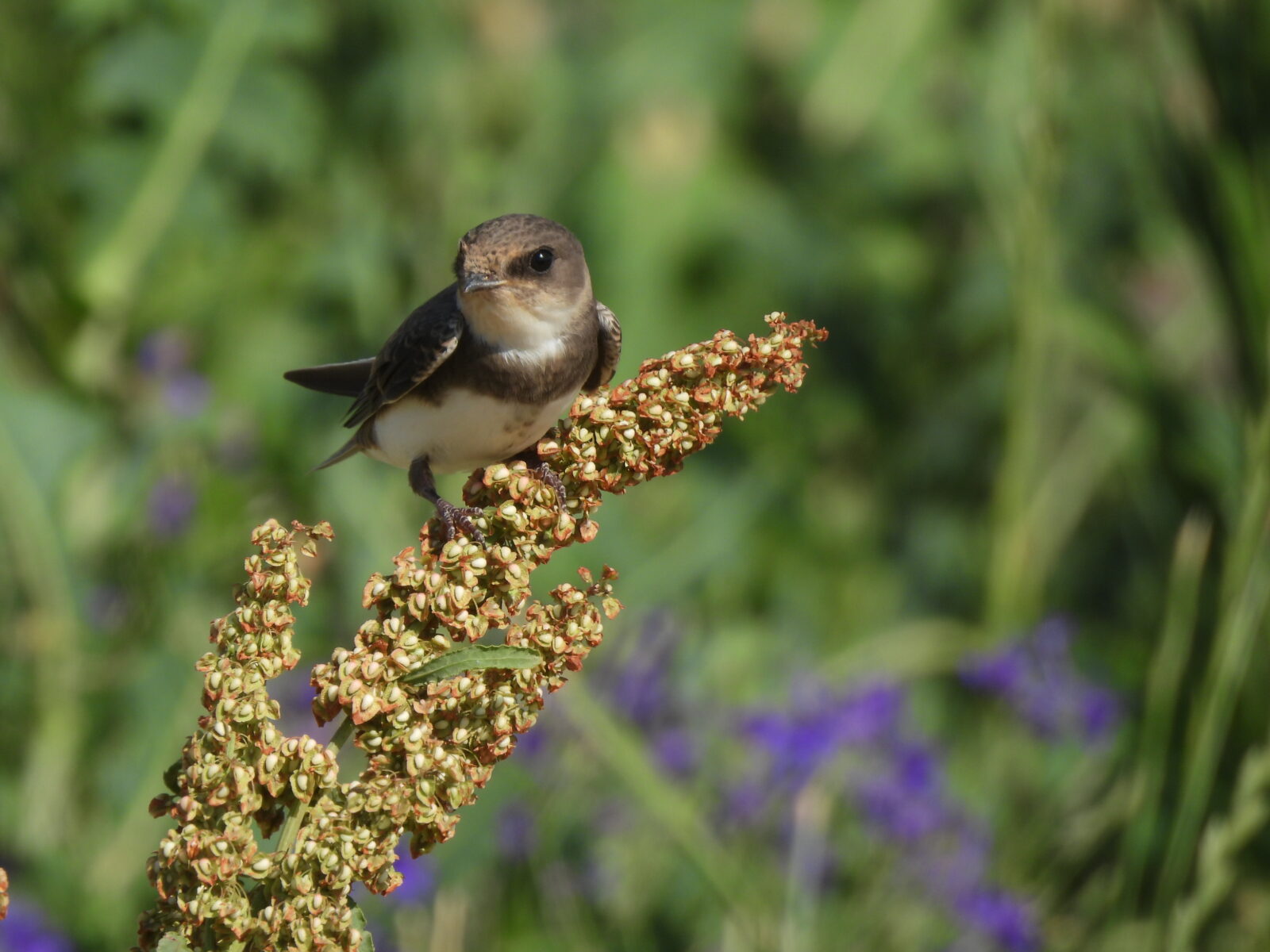
Small Grant Fund final project report on rare forest bird species and Collared Sand Martin colonies in Serbia
June 5, 2026 | Marina Kipson
We are proud to share the news of the successful completion of the project “Survey of poorly known forest birds and the first census of Collared Sand Martin (Riparia riparia) colonies in Serbia”! Thanks to the support of the EBCC Small Grants Fund, the Bird Protection and Study Society of Serbia (BPSSS) has collected invaluable data that will enrich the upcoming Atlas of Breeding Birds of Serbia.
Research on the forests of southern, eastern, and western Serbia focused on searching for easily overlooked and rare bird species whose breeding areas are primarily located in the mountain forests of those regions. The first census of the Collard Sand Martin in Serbia focused on collecting colony data to provide a basis for further research, protection, and monitoring of the national population.
In both cases, the field research was preceded by the development of the methodology and research planning based on previously available data. During these surveys, which were conducted mainly in poorly researched regions of the country, data were also collected on all other bird species for the upcoming Atlas of Breeding Birds of Serbia.
The Forest Bird Species
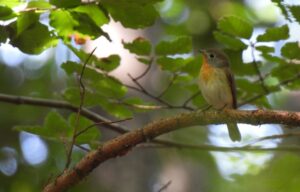
Field research on forest bird species was conducted from April to mid-June in 2025, involving 34 researchers and volunteers. During the surveys, observers recorded a total of 72 target species’ territories across 571 census points, mainly in areas where such surveys had never been conducted before.
The specific findings for the target species include:
- Collared Flycatcher (Ficedula albicollis): 39 new territories recorded.
- Red-breasted Flycatcher (Ficedula parva): 12 new territories recorded.
- Wood Warbler (Phylloscopus sibilatrix): 12 new territories recorded.
- Semi-collared Flycatcher (Ficedula semitorquata): 9 new territories recorded.
- Eastern Bonelli’s Warbler (Phylloscopus orientalis) & Willow Warbler (Phylloscopus trochilus): Not detected during the survey.
Based on sampling effort and encounter rates, the Collared Flycatcher was the only target species classified as widespread and “common” when all previously collected national data were taken into account. The results confirm that the Red-breasted Flycatcher, Wood Warbler, and Semi-collared Flycatcher remain highly rare, localised, and sporadic breeding species within Serbia.
The Collared Sand Martin Colonies
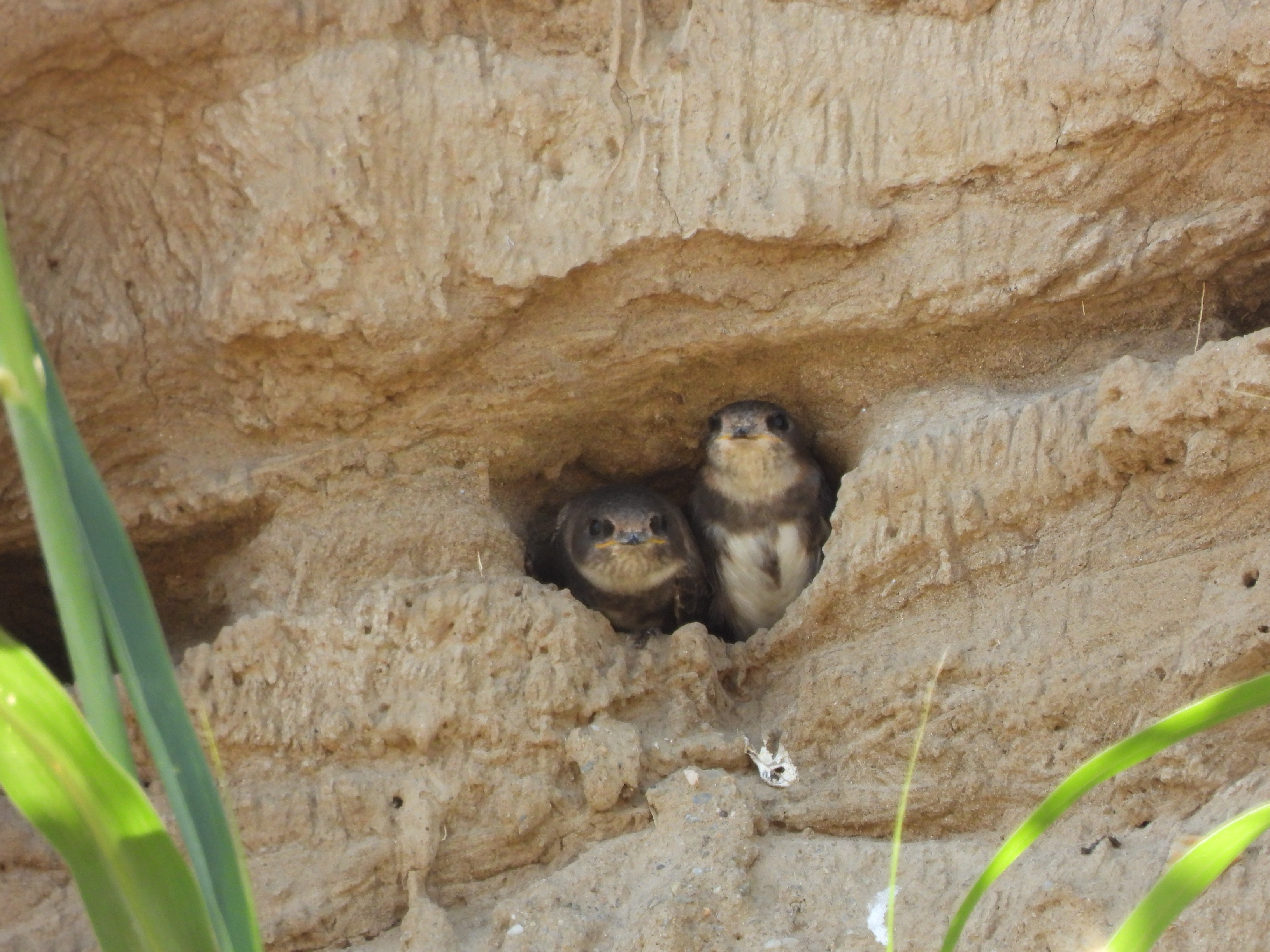
Following the forest bird species survey, a comprehensive survey of Collared Sand Martin (Riparia riparia) colonies commenced in mid-June, mobilising 83 researchers and volunteers.
Unfortunately, the survey has confirmed a significant long-term decline in the Collared Sand Martin population. Field teams visited 916 potential sites, documenting 326 colonies (234 active and 92 recently abandoned locations). In total, observers estimated 32,763 active breeding pairs! This marks a drastic drop since the 1990s, when single regions hosted up to 25,000 pairs.
Breeding sites remain concentrated along the rivers Drina, Velika, Zapadna, and Južna Morava, Danube, Nišava, Toplica, Tisa and Tamiš. The largest active colonies discovered are:
- Bački Breg Novi Kop 1: 2,248 active nesting holes
- Šljunkara Radujevac 2: 2,000 active nesting holes
- Morava Kop: 1,300 active nesting holes
Habitats Under Severe Threat

Worryingly, population declines were recorded across all key Important Bird Areas (IBAs), including Deliblatska Peščara and Titelski Breg. Birds are increasingly forced to nest in active sand-and-gravel pits (e.g., Kelebija, Lipnički Šor). While these pits provide temporary ground, nests are constantly destroyed during excavations. Meanwhile, natural riverbanks are being devastated by illegal gravel extraction, river engineering, and illegal waste dumping, destroying tens of kilometres of historic breeding grounds.
Tracking Their Movements
To support future conservation, field activists successfully ringed 1,747 individuals. Early breeding recoveries between Serbia and Hungary are already providing vital data to help track their migrations.
Due to the species-specific life history in dynamic, unstable habitats, developing a methodology and organising a census for the Collared Sand Martin (Riparia riparia) proved highly challenging. Nevertheless, we now have a baseline dataset that can be used for future monitoring of Collared Sand Martins.
Collecting data on other breeding birds
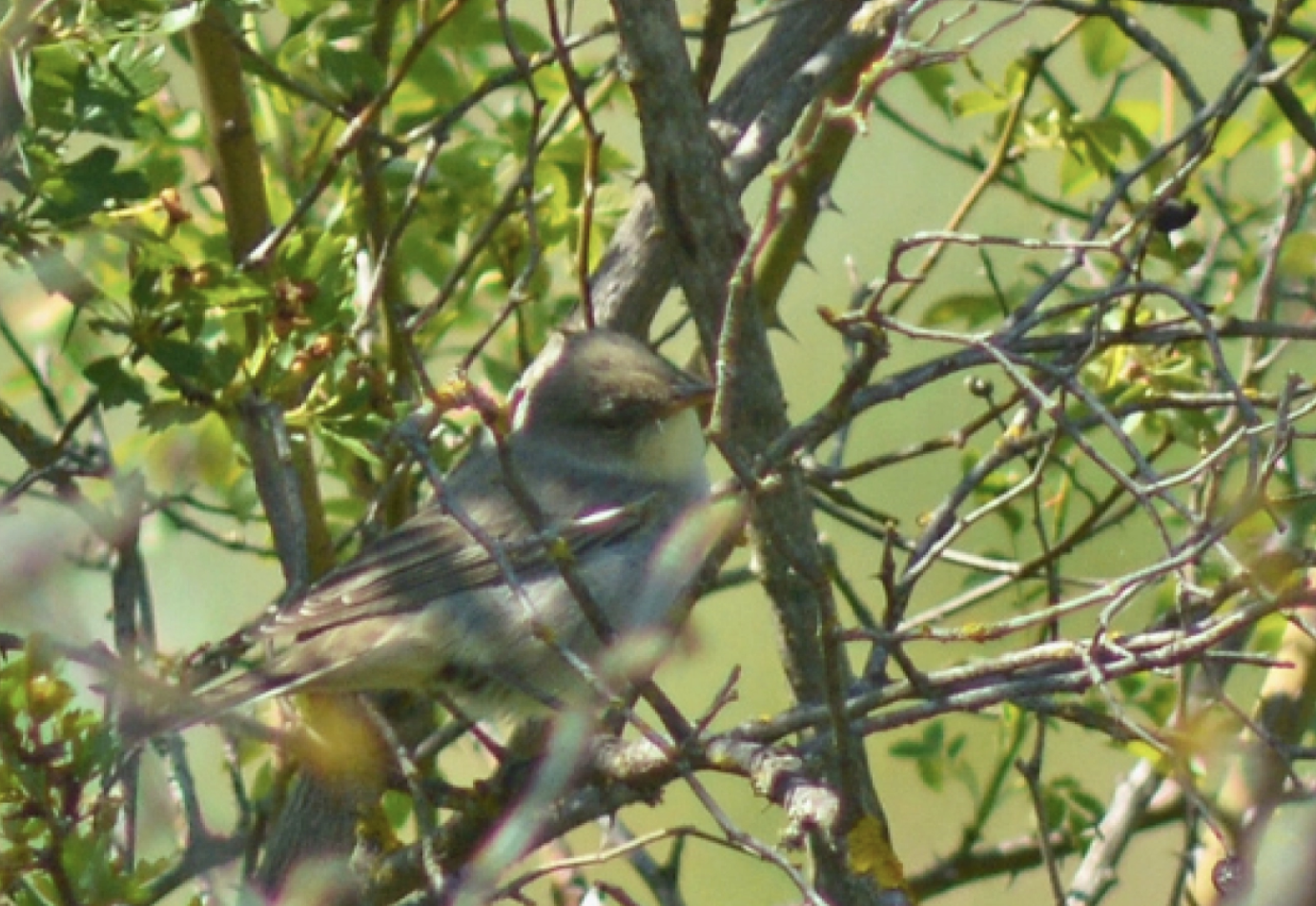
During surveys of key target species, observers also collected data on all other bird species, particularly in data-deficient areas of Serbia, which were the focus of this project. These efforts have significantly advanced BPSSS’s work on the first National Breeding Bird Atlas.
Our associates collected at least 14,610 atlas-coded records across 197 bird species during both project activities. Many rare and localised species for Serbia were recorded, including the Booted Eagle (Hieraaetus pennatus), Montague’s Harrier (Circus pygargus), Levant Sparrowhawk (Accipiter brevipes), Eurasian Three-toed Woodpecker (Picoides tridactylus) and White-backed Woodpecker (Dendrocopos leucotos), Masked Shrike (Lanius nubicus), Zitting Cisticola (Cisticola juncidis), Eastern Orphean Warbler (Curruca crassirostris), Eastern Black-eared Wheatear (Oenanthe melanoleuca) and Rock Sparrow (Petronia petronia), among others.
The most significant discovery was the presence of the Olive-tree Warbler (Iduna olivetorum) near the border with North Macedonia, representing the first confirmed probable breeding record of this species in Serbia.
Reporting team:
Jelena Nikolić Antonijević
Marko Šćiban